
Everyone is crazy about Tilly
Longreads have been written about her in Variety and TheWall Street Journal, James Cameron and Guillermo del Toro hate her, George Clooney only wishes her harm, and Emily Blunt considers her a harbinger of the apocalypse. Her name is Tilly Norwood, and she began her online career in the fall of 2025 with the words:
I am Tilly Norwood, the world’s first AI actress, or, as some call me, the end of civilization.

The 24-year-old pseudo-British actress is the product of producer and former actress Elaine van der Velden and a team of enthusiasts. Tilly is computer-generated, her appearance compiled from social media beauty standards. She is capable of changing accents, growing old and young, losing weight and gaining weight for a role – and all with one or two clicks of a computer key. It is not surprising that Emily Blunt, who carefully pored over her physical form in “Edge of Tomorrow”, immediately saw a threat in Tilly and immediately reacted:
Don’t you dare hire her.

However, no one is in a hurry to sign a contract with Tilly: according to a representative of the American actors’ guild SAG-AFTRA, no self-respecting talent agency will hire Miss Norva, because then it risks losing more stellar clients who will be outraged by such a neighborhood. Pragmatic filmmakers see the emergence of AI actresses as a simple desire by their creators to cash in on the AI craze. But this precedent also rings a warning bell: technology has reached the very top of the industry, and this takeover has happened rapidly.
Full AI
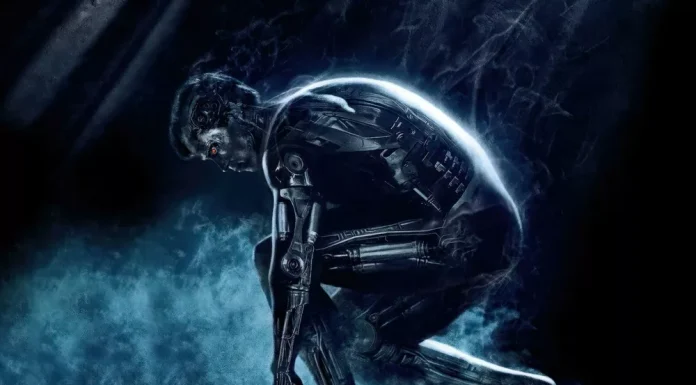
“The future is not predetermined,” John Connor consoled humanity in James Cameron’s “Terminator.”
However, 40 years after the release of the film about Skynet’s victory, it is already impossible to imagine this future without technology. Silicon Valley wunderkind Sam Altman and his artificial intelligence research company, Open AI, played a significant role in this. These days, ordinary people are increasingly turning to ChatGPT for advice instead of doctors and psychologists, and film industry workers are increasingly putting AI at the forefront of filmmaking processes. The year 2025 was marked by news that artificial intelligence would soon be able to cover up to 30% of the needs in feature films and animation (meaning, potentially lead to a reduction in the same number of employees), optimize work with special effects, sound and music, and even choose what we watch. After all, even such a thankless task as a script reader (an editor who decides whether a story is suitable for production) is already being prepared for a dozen or so AI employees.
The speed with which Open AI has occupied Hollywood is staggering, and the work standards of Altman’s employees are alarming. Or rather, these standards, like prohibitions, simply don’t exist: neural networks and AI assistants are trained on all kinds of intellectual works—from films to books—sometimes despite the active prohibitions of the authors of these works.
A serious stir in the industry is also being caused by a brainchild called Sora—an artificial intelligence model capable of generating high-definition videos. Any consenting user, including every other celebrity, can be embedded into these videos, even though their image may be unbeknownst to them. In other words, you can create a video of a tea party with Paddington Bear or dancing with Taylor Swift (and these are just the most harmless options) – Sora will remove these characters from public access only after receiving an open ban from the representatives of the character or star.

Sora also makes it easier to create fake, that is, fake videos, and therefore provokes even greater entropy in a society where the word “deepfake” has become almost a household word. To combat this AI deception, OpenAI is ready to deploy… even more AI assistants that will recognize artificially created videos. The circle is closed.
Be Your Own Director
It’s easy to get lost in this AI cycle—perhaps that’s why, by 2025, landmark credits began appearing in films, like signs of the times. A24’s film “The Heretic” was released with the disclaimer, “No generative AI was used in the making of this film.” And Universal Pictures began adding disclaimers to its films stating, “This film may not be used to train AI.” The creators of the Oscar-nominated drama Brutalist were publicly condemned for using artificial intelligence to generate the voices of Adrien Brody and Felicity Jones: AI helped them convincingly portray Hungarian immigrants and speak without accents, but made their fellow actors doubt the legitimacy of their acting nominations.

Meanwhile, the company Disney went against the tide and in November announced the imminent arrival of AI democracy on its streaming service Disney+: in the near future, every user will be able to create their own content with the help of AI. Who will watch it remains an open question. How the studio’s bosses will cope with the negativity surrounding the news of such a “new product” is another matter. But the “be your own director” trend is clear, and it highlights the most appealing aspect of the AI-driven reform wave: creating and filming your own story is now easier, faster, and much cheaper. This is truly a breakthrough moment for an industry where film production costs are only rising year after year. A prime example is the release of the Argentinian sci-fi series “Eternaut,” where the use of artificial intelligence to create a devastated city allowed the project to be released in the first place. In moderation and in the right hands, AI can transform from a goal into a tool for achieving it.
Ironically, James Cameron, the creator of the world where Skynet triumphed, shares this point of view.

Artificial intelligence has learned from the examples of our best films. But what it can’t do is create a unique product based on the author’s personal, authentic experience. It won’t choose something unusual, imperfect, or not glossy—and yet it is precisely their imperfections that make our films, our actresses, Kate Winslet, Sigourney Weaver…, so beautiful. Yes, we use computers in our lives, but they are merely tools, not a creative force. True creativity is driven only by the human imagination and nothing else.
Creativity cannot be imitated, the future cannot be predetermined. Skynet’s victory is still on hold, the author of “Avatar” seems to be telling us. And it seems that he, the pioneer of technical revolutions in cinema, can be trusted.
Text: Veronika Chugunkina