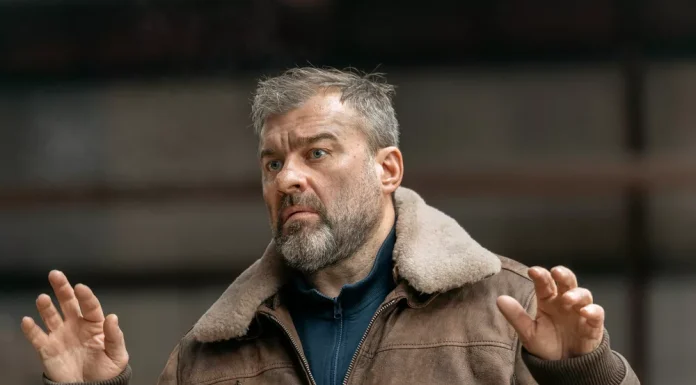

The KION online cinema premiered the comedy detective series “Captain Tuman”—the story of a police officer investigating the death of his wife while also tackling ongoing cases with his partners. The series’ cast includes three actors whose fame began in Russian cinema in the 1990s and 2000s: Mikhail Porechenkov plays Vitaly Tumansky, Andrei Merzlikin plays his antagonist and longtime enemy, and Andrei Fedortsov plays the expressive police chief. Each of them has their own path to fame and their own iconic project behind them, and this is a good reason to understand why this generation of actors is once again in the spotlight.
Porechenkov: a nineties superman turned heavyweight
Porechenkov’s path began at St. Petersburg’s Lensovet Theatre, where he performed in productions based on Camus and Beckett alongside Konstantin Khabensky and Mikhail Trukhin. From there, in 1998, he was unexpectedly cast in the TV series “National Security Agent”—the role of Alexei Nikolaev made him an instant superstar, and the series temporarily surpassed even “Streets of Broken Lights” in popularity. Next came “The 9th Company,” “Liquidation,” “1612,” a biopic about the wrestler Ivan Poddubny—and roles that proved the actor’s range was much wider than his usual roles: for example, the lyrical, vulnerable hero of Avdotya Smirnova’s melodrama “The Connection” or the patriarch of a merchant house in the costume comedy “Merchants and Children.” In Captain Fog, Porechenkov plays the title character, police captain Vitaly Tumansky, stubborn, distinctive, with his own quirks and an unfailing sense of humor, which, according to the actor himself, has become one of the most enjoyable roles for him in recent years.
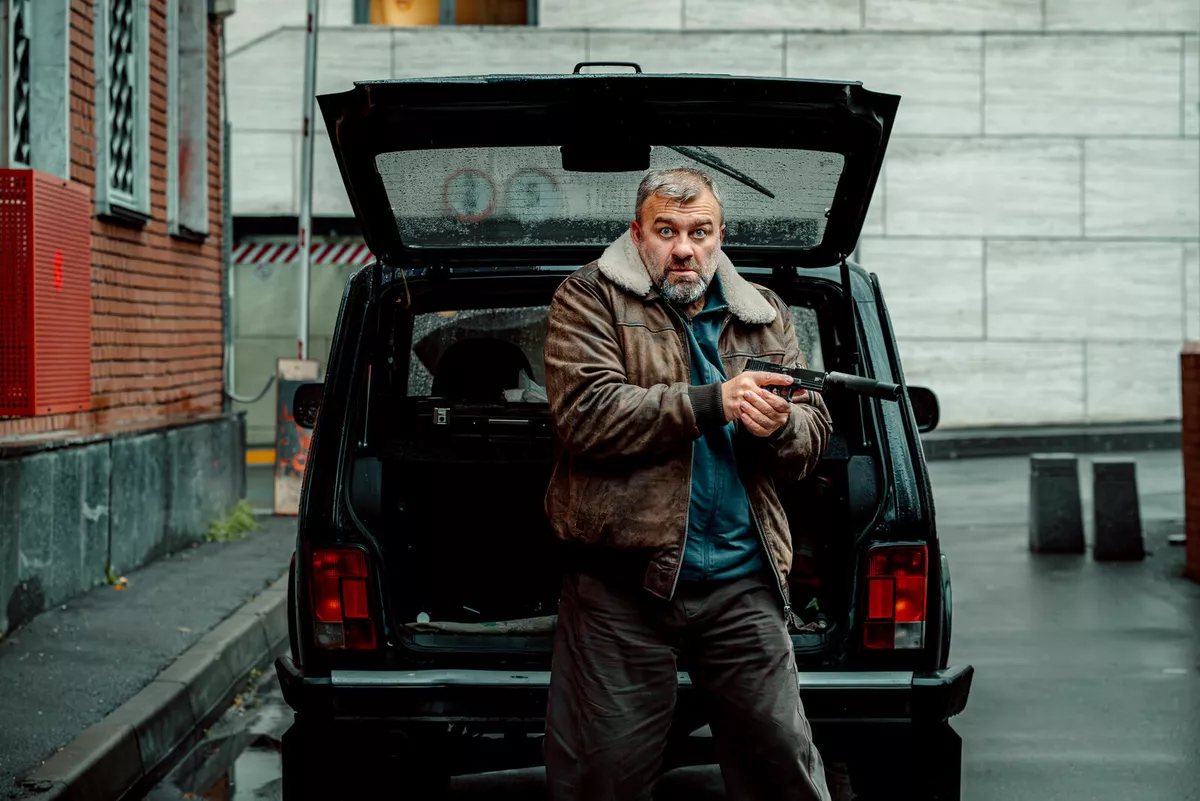
Merzlikin: the voice of the Boomer generation
Andrei Merzlikin came to the profession differently – he started in the theater under the direction of Armen Dzhigarkhanyan, played Figaro and Vershinin, while simultaneously appearing in bit parts in films by Eldar Ryazanov and Yevgeny Matveyev. His real fame came in 2003, when Pyotr Buslov cast him as Dimon Oshparenny in the cult classic “Boomer”—a film that became a manifesto for an entire generation and made stars of four actors. Merzlikin then starred in Alexei Balabanov’s “Zhmurki,” Nikita Mikhalkov’s “Burnt by the Sun 2,” and appeared in “Brest Fortress” and “Inhabited Island”—almost always as tough but charming men with their own codes. In “Captain Fog” his character, according to the actor himself, has a set of habits and quirks that would be rather annoying in ordinary life, but in the series they turn into a source of good-natured jokes.
Fedortsov: the man from “Brother” who became the face of “Deadly Force”
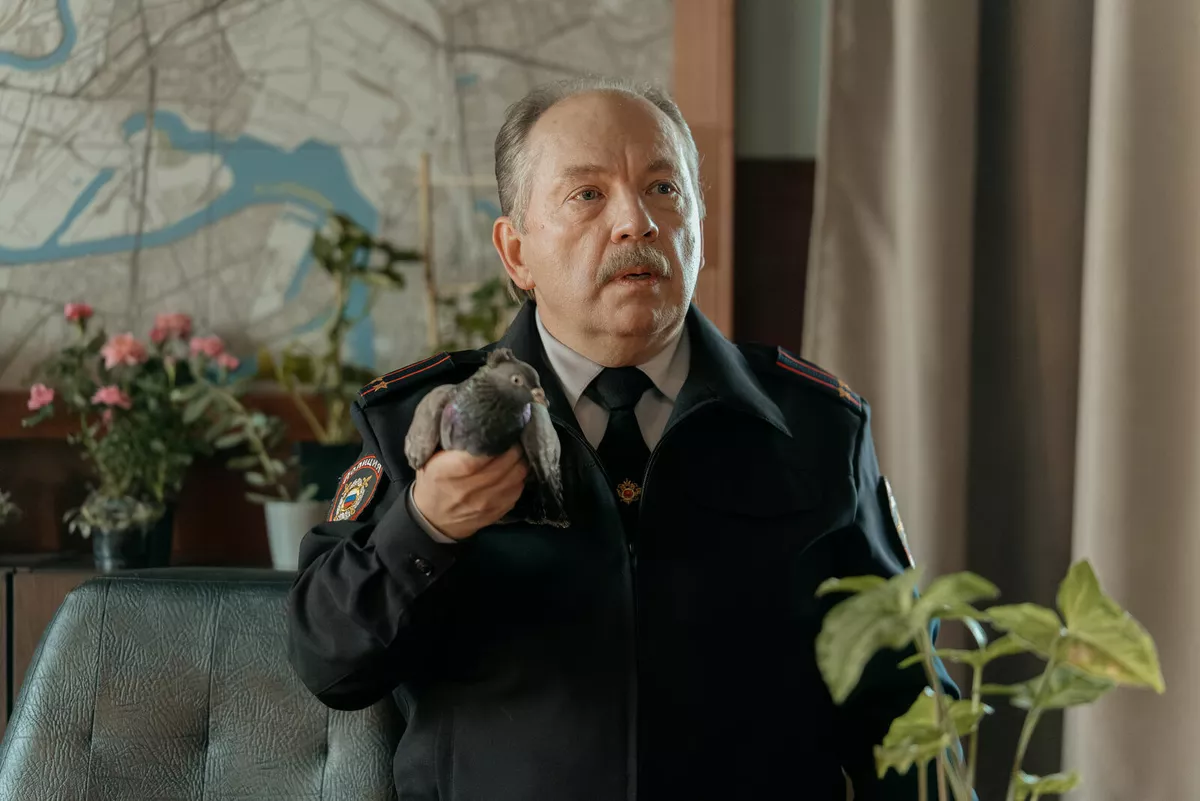
Andrey Fedortsov started out back in 1993 with a small role as a student in Dmitry Astrakhan’s film, and in 1997 he appeared in an episode of Balabanov’s cult “Brother” – he played He played the role of radio director Styopa and received a prize from the Sozvezdie festival for it. He truly gained widespread recognition in the early 2000s with his role as Vasily Rogov in “Deadly Force,” one of the most recognizable Russian detective series of the time. Since then, his filmography includes over a hundred works, including Vladimir Bortko’s “The Master and Margarita,” “Liteiny,” and “Police Brotherhood.” In Captain Fog, Fedortsov joins the cast in one of the roles of a police officer, fitting seamlessly into the atmosphere of a friendly, ironic view of the profession, which he largely shaped twenty years ago in other series about people in uniform.
Why it works now
All three have different starting points: theater school, a cult crime drama, a detective series of the 2000s. But they have one thing in common: the ability to play recognizable, real people without unnecessary pathos, while remaining absolutely believable, even in the comedy genre. That’s why their joint appearance in “Captain Fog” feels less like a nostalgic attraction and more like a logical development: viewers who grew up on “Boomer,” “Deadly Force,” and “National Security Agent” are interested in watching how the same actors, having matured by more than twenty years, retain their recognizable charisma—and are able to laugh at themselves and their characters no worse than they once knew how to scare them or admire them.