

“A Cruel Romance”
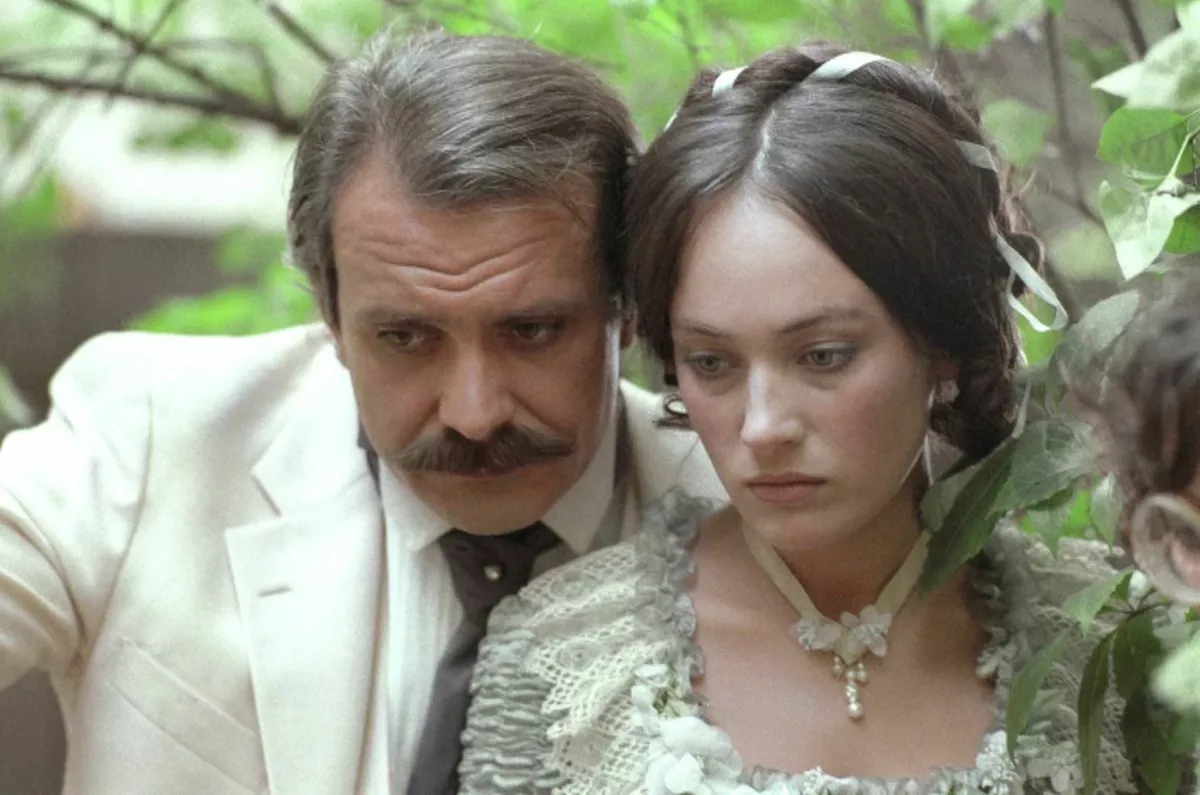
In the film adaptation of Ostrovsky’s “The Dowry,” Guzeeva played Larisa Ogudalova, a girl without a dowry, over whom men, certain of their right, haggle, argue, and make decisions. Around her are the wealthy Paratov, the conceited Karandyshev, calculating admirers, and a mother trying to arrange her daughter’s future in a world where love too quickly boils down to money.
Guzeeva appeared in the film as a near-debutante and immediately found herself alongside Nikita Mikhalkov, Alisa Freundlich, and Andrei Myagkov. Her Larisa lacks the academic precision, but has the nerve of a real person. She may seem naive and abrupt, but it is precisely this rawness that works in the role. Guzeeva’s Larisa Ogudalova isn’t a museum-bound sufferer, but a young woman who longs for love and barely understands how cruel the world around her is.
The film is worth rewatching today just for the rawness of the acting. It doesn’t hinder, but rather adds a breath of fresh air to the heroine: Guzeeva isn’t playing a “legendary role,” but a young woman who still hopes for a normal, human life. Knowing the actress’s subsequent public biography, it is especially interesting to see how her on-screen character began: she already has beauty, but along with it comes a character that refuses to remain silent.
“Rivals”
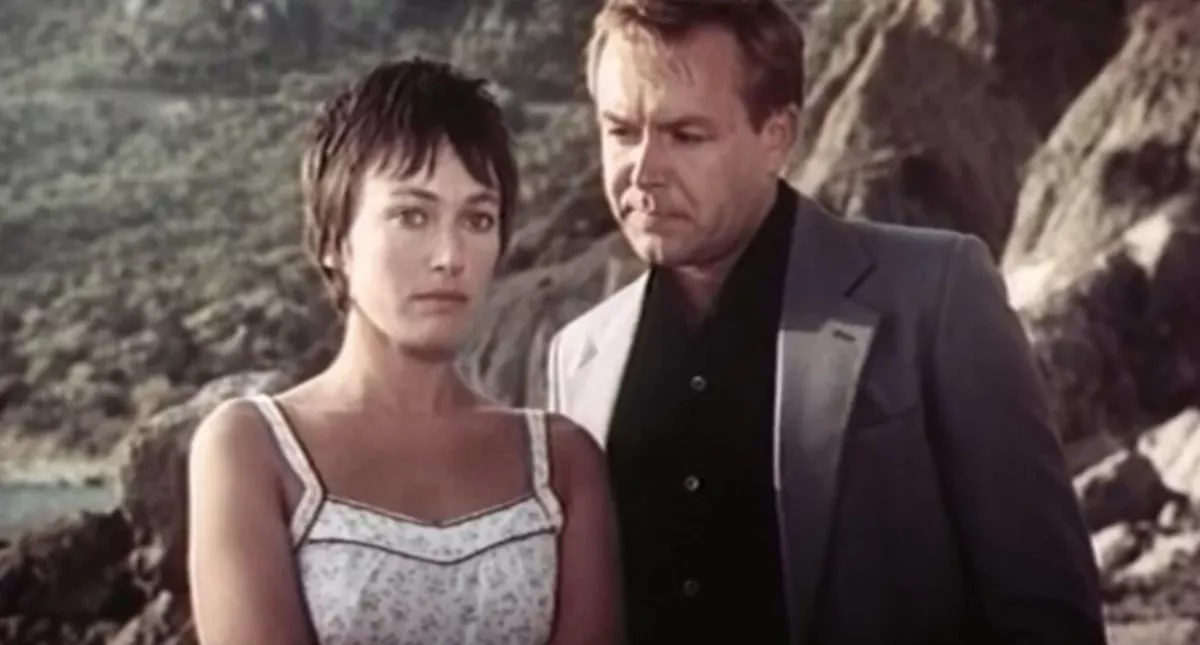
After “Cruel Romance,” Guzeeva didn’t get stuck in the image of a romantic beauty. In “Rivals,” she plays canoeist Natalia Ozernikova. The heroine trains a lot, loves her craft, but can’t rise higher than second place in competitions. Sport is portrayed here not as a pretty picture with a victorious finish, but as a space of exhaustion, envy, ambition, and inner anger.
This role is interesting precisely because of the shift in physicality. Instead of languor, there’s composure; instead of waiting for someone else to decide, there’s an attempt to snatch victory herself. Guzeeva plays a woman who refuses to be second, and this marks a significant change from Larisa Ogudalova. There, the heroine was judged and chosen by others. Here, she enters the struggle herself, albeit not always a fair one. Guzeeva tests her limits as a woman of action. This is not her best-known work, but it explains a lot about the actress: from the very beginning, she had not only dramatic fragility, but also a sporty anger, which was later easily recognized in later, already popular images.
“The Executioner”
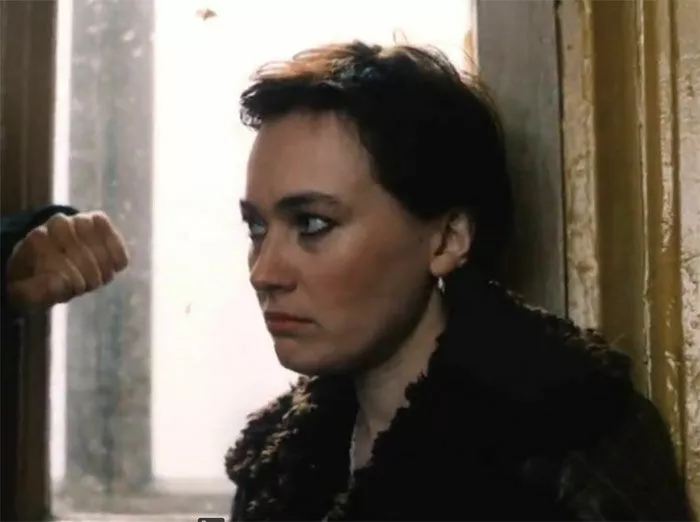
Viktor Sergeev’s film is one of those films that are difficult to re-watch for pleasure. The plot centers on journalist Olga, who survived gang violence. She does not go to the police, but turns to a crime boss for help. Revenge begins as if on cue, but quickly escalates into a chain of new crimes, where it’s impossible to separate retribution from reprisal.
Guzeeva plays Sveta, Olga’s friend, who helps the rapists carry out their plan. It’s an extremely unpleasant role: Sveta lives in a world of ostentatious beauty, easy money, fear, and moral emptiness. She’s not a demonic villain, but someone who conveniently ignores the consequences until the consequences come for her.
For Guzeeva, this is an important departure from the image of the beautiful victim. In “The Executioner,” she plays a woman the audience isn’t obligated to view with sympathy. And it’s a bold move: after playing Larisa Ogudalova, she could have spent years in the safe zone of tragic beauties, but here the actress settles for a dirty, awkward, and internally broken role. It’s worth rewatching “The Executioner” as a portrait of the times—and as an example of how Guzeeva knew how to be anything but charming on camera.
“Patriotic Comedy”
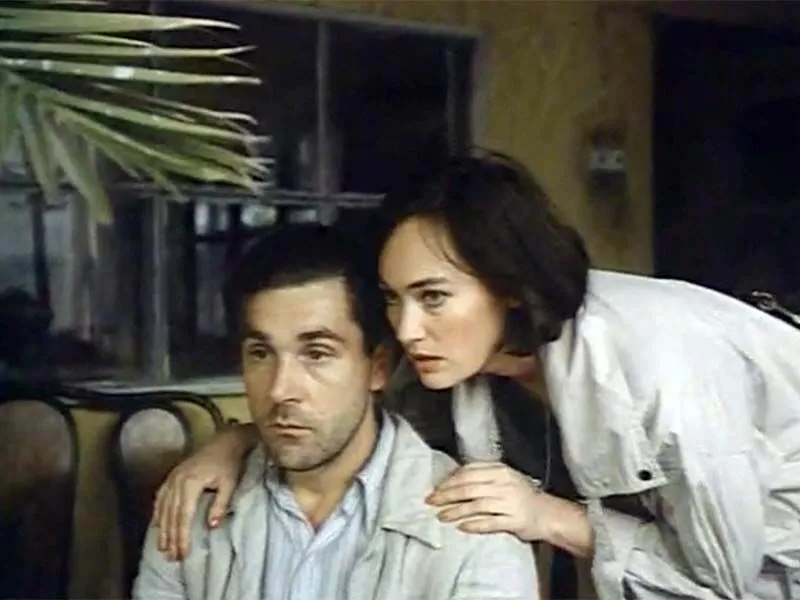
Vladimir Khotinenko has a completely different register. “Patriotic Comedy” is a strange, ironic film from the early 90s: Sergei Makovetsky’s character lives in a house where a mysterious room is discovered that leads to practically the entire world. Through this absurd move, the film speaks about the country, confusion, dreams of a different life, and the impossibility of simply up and leaving one’s own reality.
Guzeeva’s Zinaida is practical, down-to-earth, thrifty, and as concerned with the personal lives of others as she is with her own. Among other things, she tries to arrange a relationship with her brother—a detail that today rhymes especially amusingly with the actress’s future television biography. Zinaida is not the most striking figure in the plot, but she is important to its tension: alongside philosophical oddities and male crises, a woman appears who speaks more simply, acts more concretely, and prevents the film from completely drifting into abstraction.
“Graffiti”
In Igor Apasyan’s “Graffiti,” the young Moscow artist Andrei, instead of traveling to Italy, finds himself in the Russian hinterland. At first, this seems like punishment and provincial exile, but gradually a completely different world gathers around him: people with a difficult past, village wanderers, veterans, eccentrics, lonely women. His graffiti becomes not a fashionable gesture, but an attempt to preserve faces and memories.
Guzeeva plays Maria, a local woman with a strange reputation, connected to one of the characters. This is a role from her mature period, when almost nothing is required of her former glossy beauty. What matters is the breakdown, the strangeness, the restlessness. This Guzeeva rarely entered the public memory, because she is not a quotable image or a television mask.
In “Graffiti,” it is clear that in her mature years, Guzeeva could retreat into a quieter, even painful character. Not commanding the frame, but leaving behind a sense of human destiny, glimpsed out of the corner of her eye. For an actress with such a powerful public temperament, this is especially valuable.
“Mother-in-law”
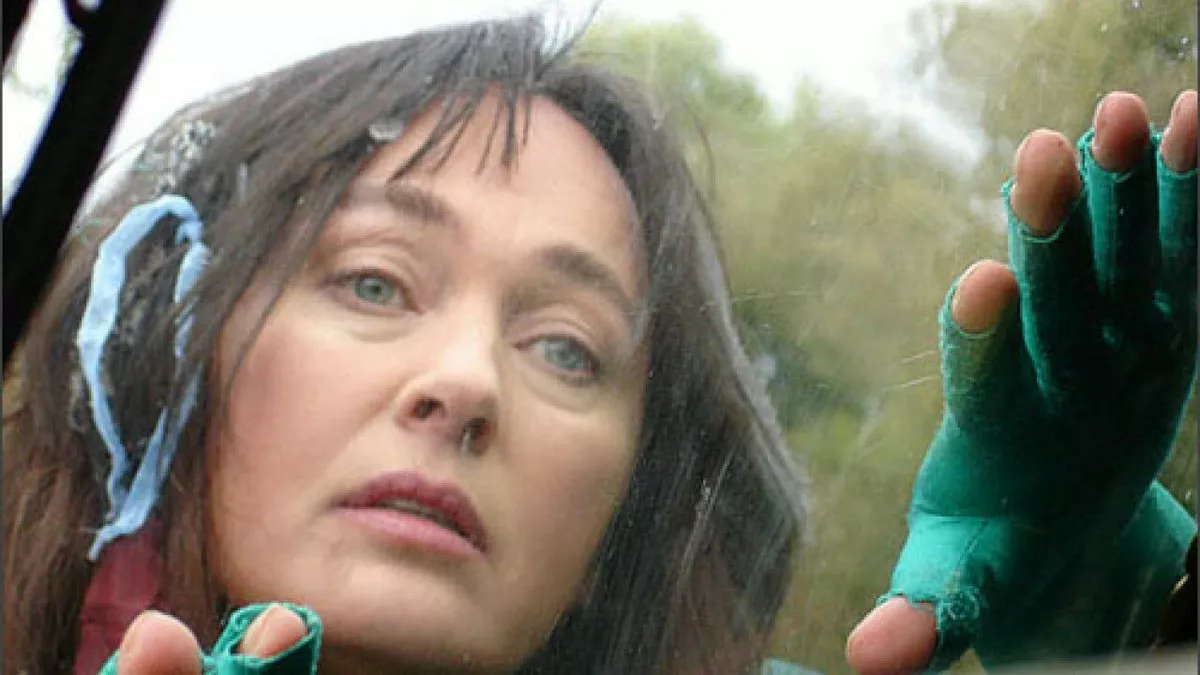
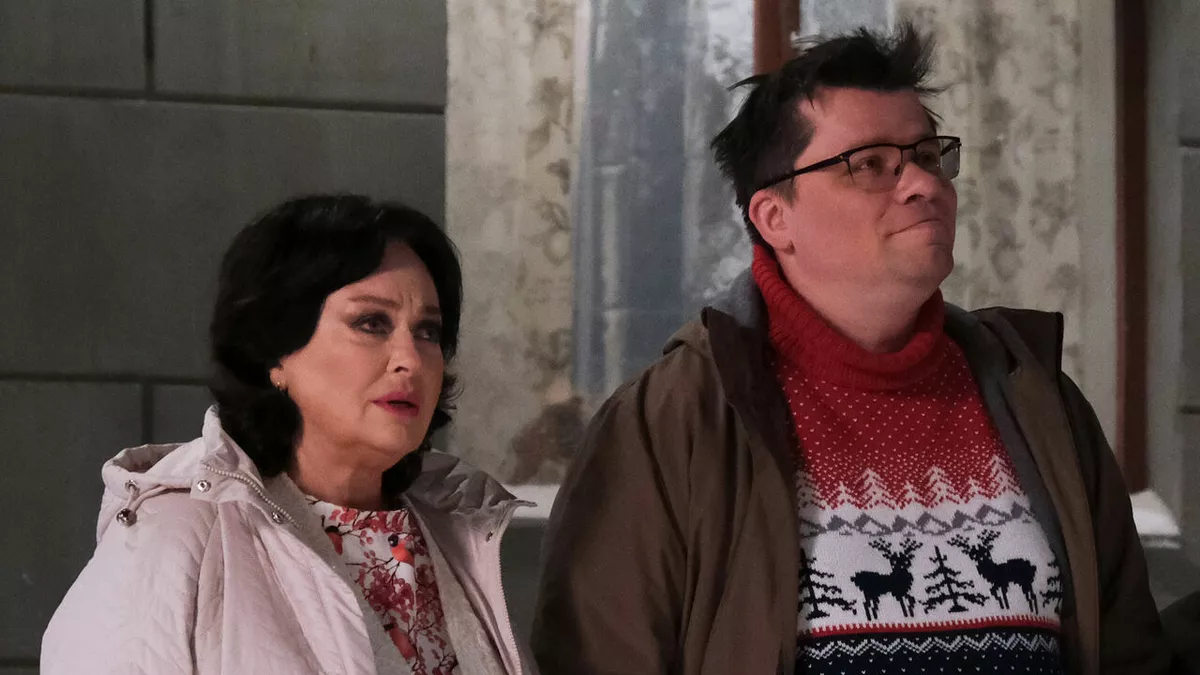
Guzeeva returns to mainstream cinema after a long period on television. The plot is as genre-defining as it gets: the domineering mother-in-law Olga Nikolaevna and her son-in-law Viktor, played by Garik Kharlamov, can’t stand each other, and then swap bodies. What follows is a comedy of situations, family squabbles, and the obligatory movement towards mutual understanding.
On paper, this could have been a collection of jokes about a mother-in-law and a son-in-law. But Guzeeva brings to the film what viewers have long known from her television persona: bluntness, a knack for catchphrases, an intolerance of weakness, and a habit of commanding. The difference is that now it’s part of the role, not just a public quirk.
Watching “Mother-in-Law” is worth it for how Guzeeva appropriates her own myth. She doesn’t abandon the image of “the woman who will bring everyone down,” but rather takes it to its comedic extremes. At the same time, behind the harshness, there remains a completely understandable human reason: her heroine cares, but does it in such a way that her loved ones want to run away.
“Three Sisters”
In “Three Sisters” at the KION online cinema, Guzeeva gets a role that perfectly combines her current on-screen persona. Her Tatyana is the owner of a jewelry business from Nizhny Novgorod, the mother of three adult daughters. Ira, Olya, and Masha dream of Moscow and count on its help: some need money, some need support, and still others need the opportunity to leave their children and take care of their own lives. But Tatyana returns from vacation with a young lover, Nikita, played by Pavel Derevyanko. The arrival of their mother’s young lover distracts the daughters from all their problems and forces them to think about their mother.
At the plot level, this is a family comedy with Chekhovian echoes: three sisters again, again the dream of Moscow, again talk of a future that is constantly postponed. But the main intrigue here is not whether Nikita is a con man or not. More interesting is Tatyana herself. It seems she is finally choosing herself—romance, travel, freedom from the endless responsibilities of motherhood. And then it becomes clear that this freedom is also calculated: Tatyana does not want to let her daughters go and knows how to keep them close without directly asking.
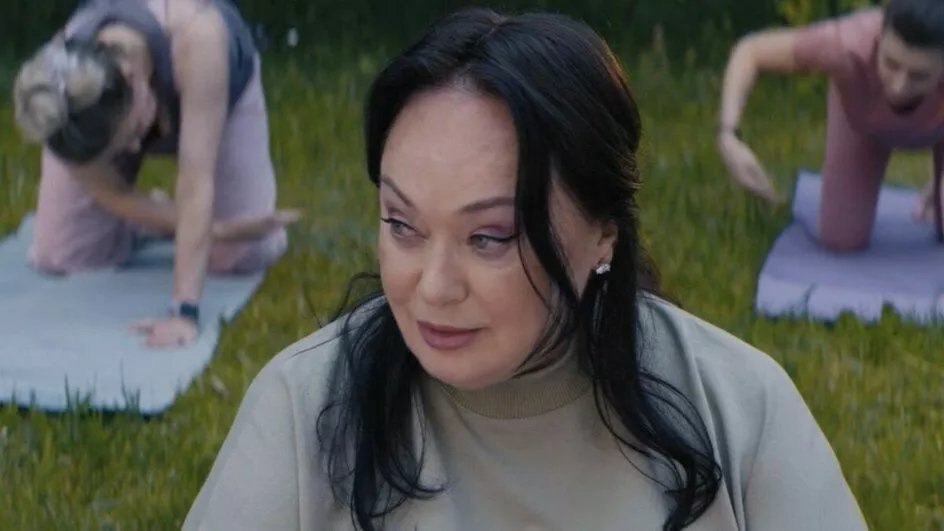
For Guzeeva, this is a very precise role for the current stage. She plays a woman the audience instantly recognizes: powerful, funny, blunt, beautiful in her confidence, hurt by the fact that her children have grown up. She has that very Guzeeva-esque national character—not simplicity, but recognizability. Everyone knows mothers like her: they love, they pressure, they help, they manipulate, they take offense, and yet they remain the center of the family. In this role, Guzeeva doesn’t hide behind her age or try to feign youth. She plays a woman who wants to be needed.
Source: hellomagrussia.ru