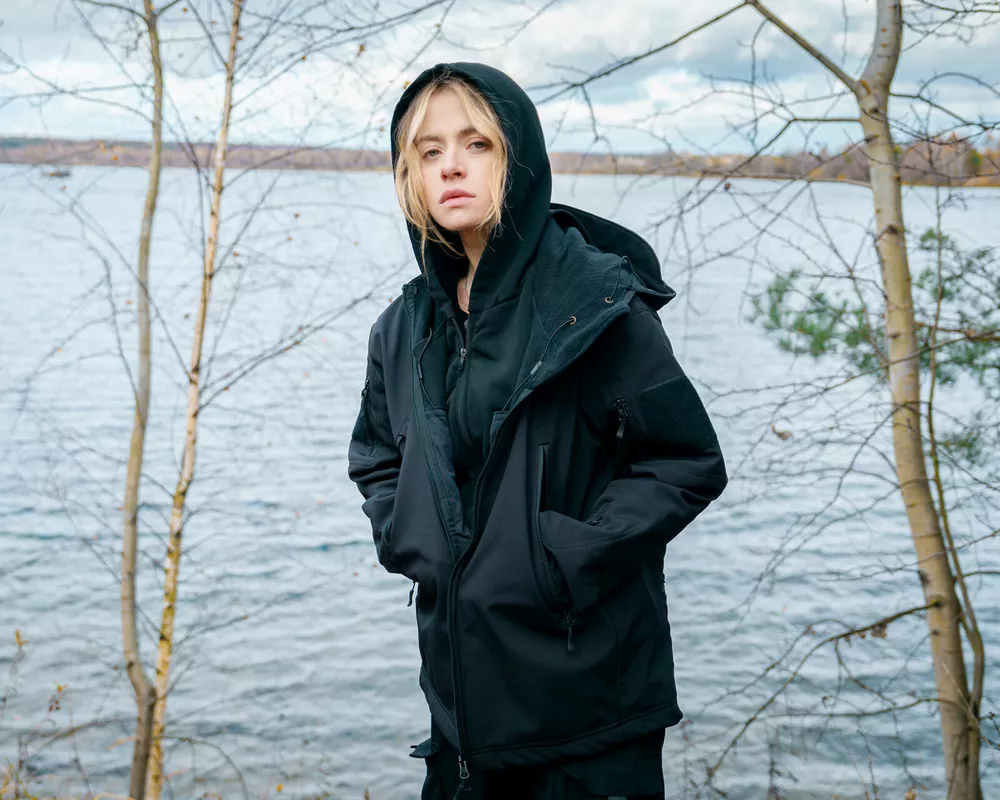

Scale fragments of unknown origin are found on the victims’ bodies, leading residents to believe a mermaid has awakened in the town, claiming the souls of 19 people. The case itself gradually becomes personal for Bakhtin, evoking painful memories. The series stars Andrei Frolov, Ekaterina Kabak, Dmitry Palamarchuk, and Irina Temicheva, and is directed by Murad Aliyev and Galina Urazova. “Call of the Mermaid” will captivate viewers not only with the intrigue of the investigation, but also with its sophisticated mythology, the atmosphere of a small waterside town, and filming in which the elements themselves play a significant role.
To learn about rare mythology
The creators of “Call of the Mermaid” turn not to the abstract image of the mermaid, but to a more complex and rare mythological layer—the image of the bereginya (bereginya). Director Galina Urazova explained that the team studied various ideas about mermaids and bereginyas, their origins, and their role in folklore, and one of these motifs is woven into the series’ plot. Because of this, the mythology in “Call of the Mermaid” functions as part of the dramaturgy: it’s more than just a backdrop. It influences the atmosphere, the characters’ behavior, and the investigation itself, in which a rational version of events constantly collides with an ancient legend.

To See a City That Doesn’t Exist
The series takes place in the fictional Volga city of Berezhnyansk, and this is an important decision for the story as a whole. The creators didn’t tie the plot to a specific point on the map in order to preserve the collective image of a small waterside town with its own legend, habits, and internal structure. According to Galina Urazova, Berezhnyansk was conceived in detail: they discussed its coat of arms, which features a bereginya (a goddess), the character of its inhabitants, details of the environment, and how it differs from other places. This approach helps the series create a recognizable space without distracting the viewer with comparisons to the real city. On screen, this creates the atmosphere of a closed world, where ancient stories coexist alongside everyday life.
To literally “dive” into history
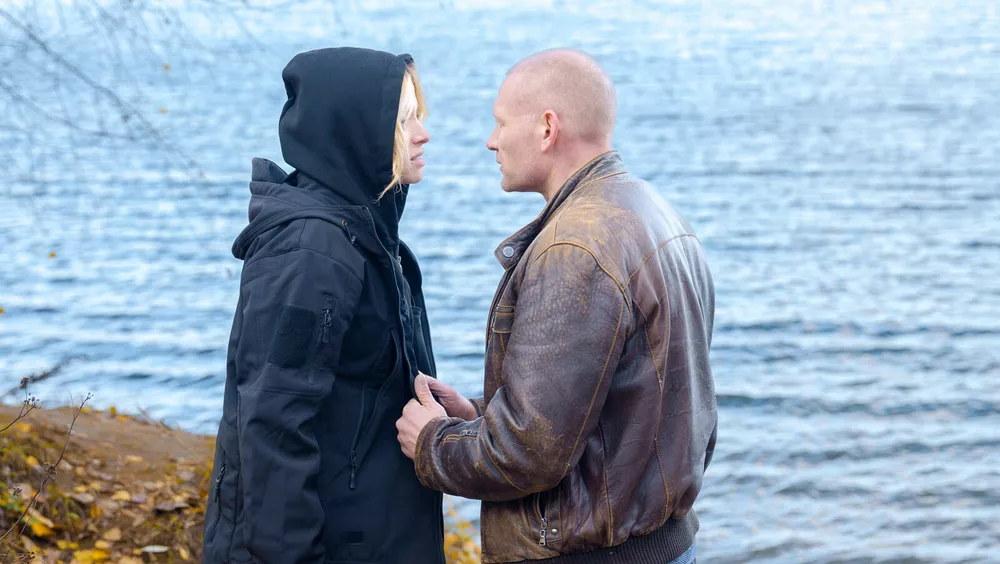
For “Call of the Mermaid,” water is a full-fledged part of the action, so many of the series’ most complex and spectacular scenes involve it. The team filmed on bodies of water, worked with boats, night scenes, and underwater perspectives. For the underwater scenes, special cameras and boxes were used, creating the texture of the seabed, the seaweed, and the environment itself to make this world look convincing on camera. Some episodes were also filmed on location. According to the director, the actors themselves entered the cold water during complex scenes. Andrei Frolov and other actors participated in stunts under the supervision of the stunt team, which added not only to the spectacle but also a sense of real physical tension.

To enjoy the exquisite visuals
In “Call of the Mermaid,” the visual world of the series plays an important role. This applies to the image of the mermaid, the special makeup, and the details associated with the victims. Ulyana Shestova served as the makeup artist on the project, and one of her team’s tasks was to create a unique texture associated with the ritual aspect of the story. Stitches, eye work, scales, and skin texture all became part of the intrigue. The scales themselves are also no coincidence: according to the plot, they don’t belong to the familiar fauna of this region, and this makes them a key piece of evidence, immediately taking the investigation beyond the ordinary.

To experience the story with the characters
“The Call of the Mermaid” is built not only on the mystery of the murders, but also on a strong emotional arc, so a well-rounded cast was especially important for the project. According to Galina Urazova, the chemistry between the actors and the feeling of believability in their interactions were crucial during the casting process. Ekaterina Kabak was actively involved in developing her character, suggesting details that refined the character. Andrei Frolov, according to the director, proved important not only for his charisma but also for his ability to convey both strength and inner vulnerability. Each key character has their own drama, their own feelings and their own motives that gradually come to the surface.