
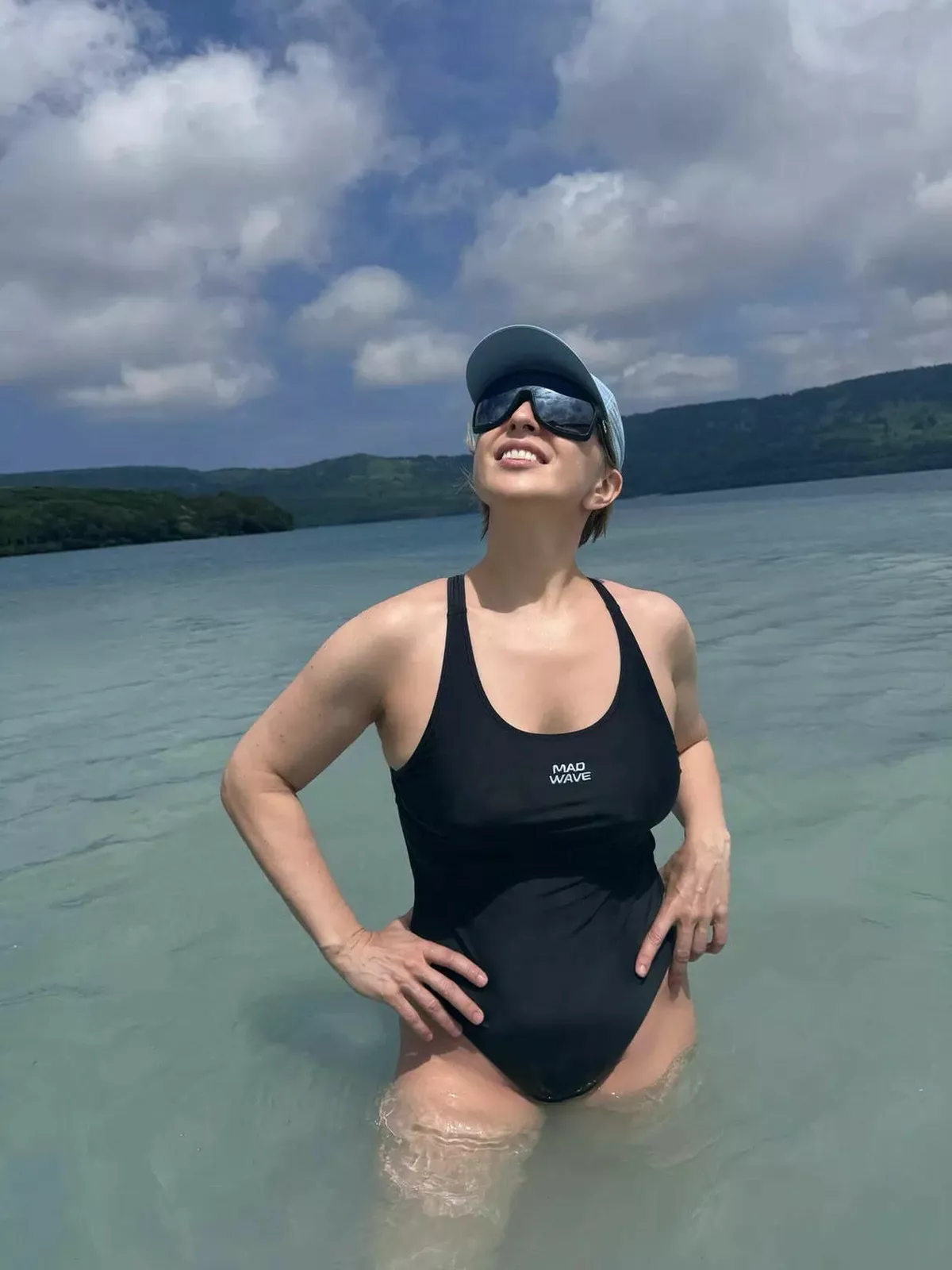
Social media is currently buzzing about the so-called “Ozempicalypse”—an alarming trend in which Hollywood stars, including Kate Beckinsale, Ariana Grande, and Jenna Ortega, are looking increasingly emaciated. In response to this trend, TV presenter Yana Churikova posted a photo in a swimsuit—without filters or retouching. In an exclusive interview with HELLO!, she explained why she did it and shared her experience with an eating disorder.
I, like any woman, hesitated. But I was resolutely convinced by the fact that there are virtually no images of ordinary human bodies left in the media or on my feed. I recognize everyone’s right to have the body they desire. But once this image enters the media, it ceases to be solely a personal choice and becomes a problem for millions of ordinary women.
At first, filters and Photoshop created a distorted picture of the world, creating images of people who don’t exist in reality. Now the race for thinness has returned. Lose weight to the point of starvation, chasing a non-existent ideal? I went through this early in my career. I thought the problem had gone away and people, including my colleagues, had become more aware. But, alas, that’s not the case. I posted this photo so that my feed would feature a simple, ordinary Russian woman—and so that other girls wouldn’t be ashamed of their bodies.
Yana Churikova knows firsthand what an eating disorder is. In the early 90s, she survived anorexia and bulimia. In her recovery, the TV presenter particularly credits the doctor who helped her put herself back together:
There were no clear treatment protocols back then. But I was already showing serious physiological symptoms: memory loss, hair loss, amenorrhea, and hand tremors. So, the first doctor I saw was an endocrinologist. She began restoring my thyroid function, and then worked with me as both a psychologist and a nutritionist. She refocused me on myself and showed me a direction for further work.
Now the entry point for help is clear: there are psychologists and specialists who work with eating disorders. The scariest thing is that it’s never about the food itself—the problems lie much deeper. In my case, it was a lack of internal support, self-esteem issues, and an inability to cope with hate. With age, as I gained a better understanding of myself and my priorities, the eating disorder subsided.
Yana admits that for a long time she convinced herself that everything was fine and didn’t notice the warning signs:
The scariest thing is that you don’t see the “red flags”—and you like everything. Even when my hands were shaking and my hair was falling out, I loved my thinness so much that I ignored these symptoms. But when my relatives stopped recognizing me, that’s when I realized I’d hit rock bottom.
Today, the TV presenter is raising a daughter and does everything possible to avoid passing on her traumatic experience:
I understood what triggered me, and I try to avoid these factors at home. First of all, I never judge my body. No phrases like “Oh, how much weight you’ve lost!” or “Oh, you’ve gained weight—you need to do something about it immediately!”. That’s enough to start with.
Having experienced her own struggle with an eating disorder, Yana Churikova is certain:
A public figure is no longer entirely their own. They must be responsible for what they convey—from words and meanings to body image.