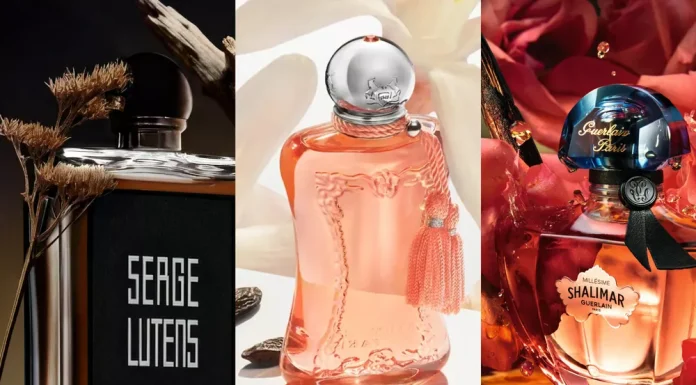

In today’s perfume market, dominated by sillage, power, and instantly recognizable scents, compositions whose creators cherish nostalgic memories of a glorious perfumery past stand apart. When the focus was not on a jaw-dropping effect, but a subtle, almost intimate story. With a captivating introduction, a vibrant heart, and a breathtaking finish. For fans of this rare genre, HELLO! presents a guide—new classic perfumes with historical overtones but a modern twist.
Serge Lutens, la Collection Noire, La Nuit Tombée
The name of the chypre composition La Nuit Tombée translates as “twilight”—that moment when light gradually dissolves into the air. Here, twilight is not just an image, but a tangible substance. Incense imparts smoky transparency and resinous purity, cedar—a dryish woodiness, patchouli—earthy depth with a light camphor note. Their combination creates not a picture of a landscape, but a sense of time: a brief interval when day has already passed, but night has not yet taken over the space.
Chypre is one of the supporting structures of modern perfumery. The genre received its name in 1917 thanks to François Coty. Thus, he honored the island from which oakmoss and cistus—the key elements of the chypre structure—were supplied. Over a hundred years, the basic principle has undergone virtually no changes. A fresh top note (citrus or white floral) gradually gives way to a dark, mossy base. It is this base that is currently at the center of difficulties. Due to European restrictions on atranol and chloratranol—allergenic components of untreated oakmoss—niche perfumery is forced to seek new paths: either rethinking chypre or abandoning it altogether.
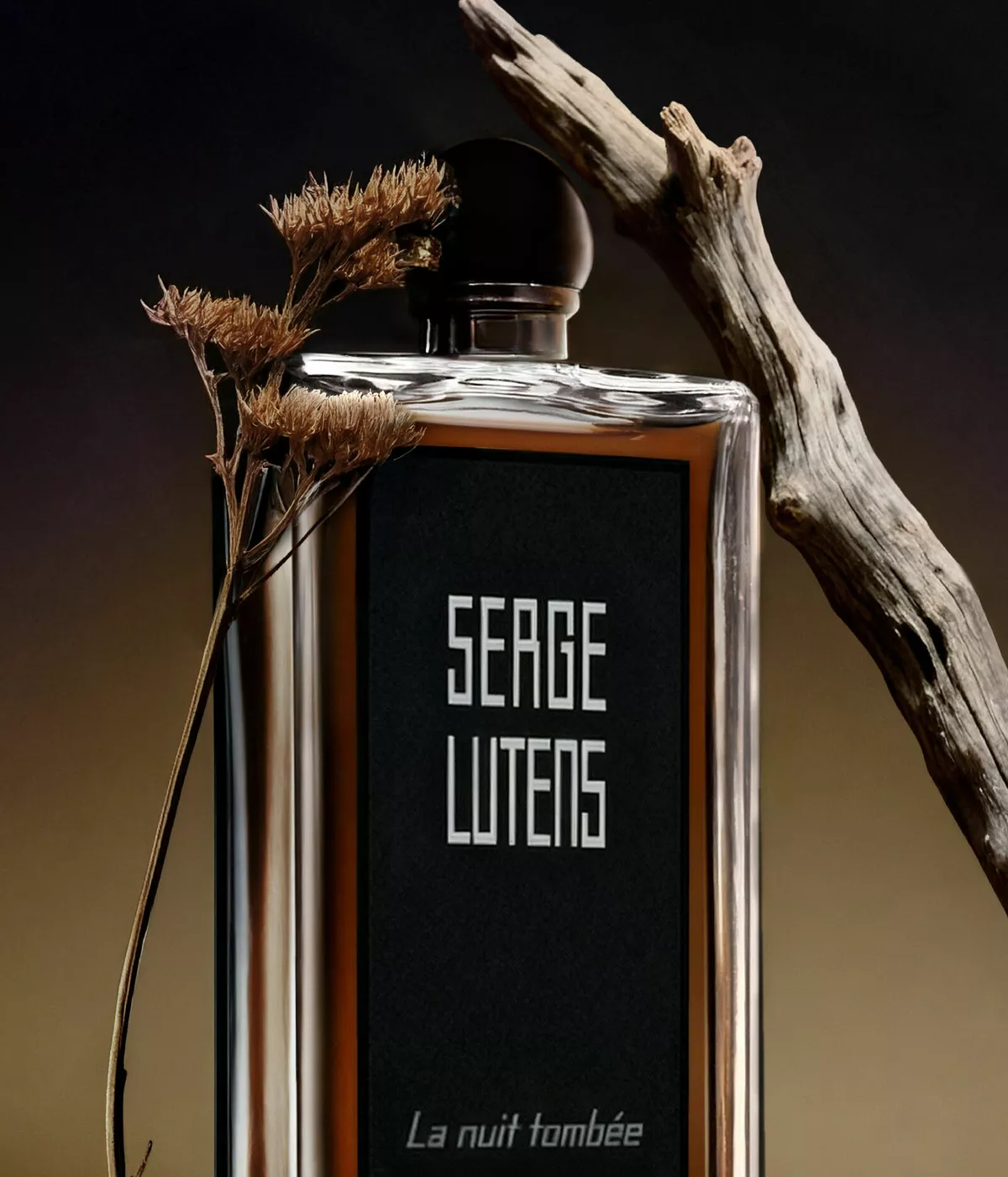
Serge Lutens took a different path. In La Nuit Tombée, a fragrance from the Collection Noire collection, the house conveys a sense of shadowy depth without using a prohibited ingredient. The base is formed by incense resin, cedar, and patchouli. This fragrance is not just another composition, but a kind of engineering solution in response to regulatory requirements: an opportunity to develop the chypre genre in a new olfactory language.
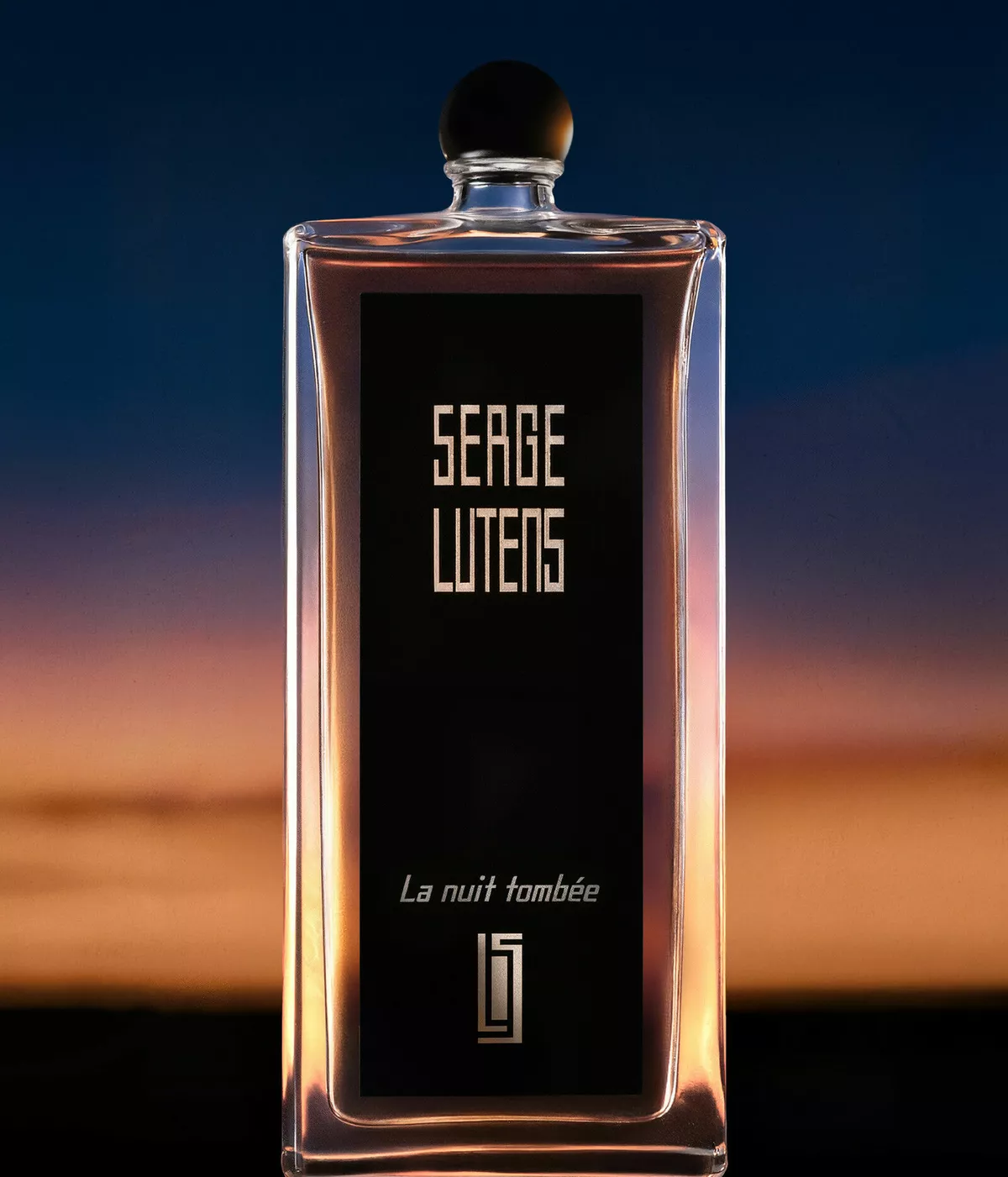
Niche perfumery has not abandoned chypre. It is painstakingly reconstructing it, step by step selecting alternative components, while some doors are closed due to regulations. La Nuit Tombée is one such step in a long and careful process of reimagining the genre.
Parfums de Marly, Athénaïs
During the reign of Louis XIV, neroli was prized at court. It was used to scent gloves and baths, but strict quality standards did not exist at the time. The scent varied from year to year, directly dependent on the characteristics of the harvest. Three centuries later, Parfums de Marly transforms this natural variability into the core idea of a new eau de parfum.
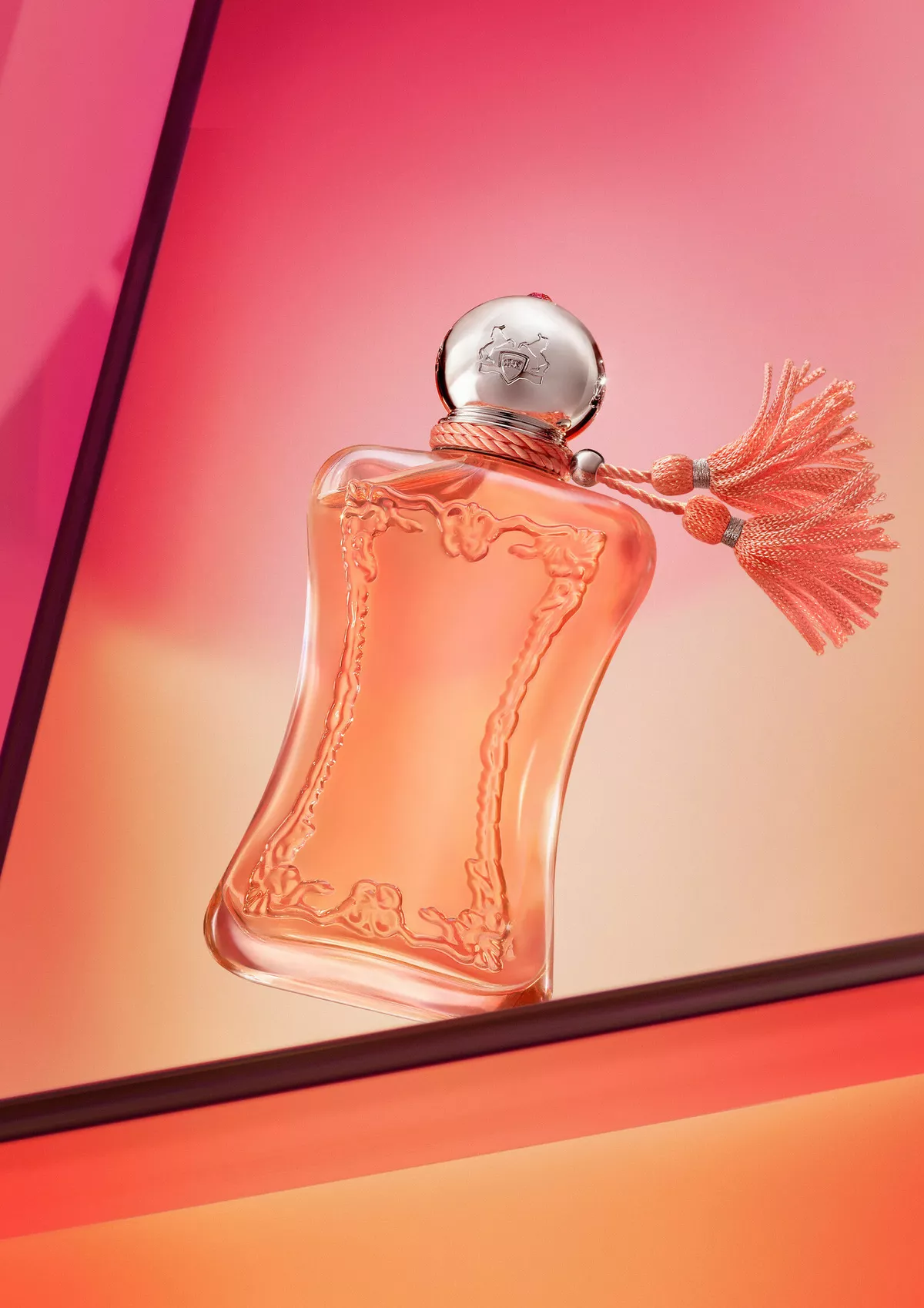
The essence of interest here lies not so much in the historical allusions, but in the clear identification of the origin of the raw materials. Athénaïs opens with neroli of the Orpur™ variety. It is obtained from fresh bitter orange blossoms, which are picked at dawn in Tunisia and Morocco. The collection is carried out by hand in the spring, then the raw materials are processed using hydrodistillation. UEBT (Union for Ethical BioTrade) certification confirms the transparency of the entire supply chain—from growing conditions and biodiversity conservation to trade principles. In the niche perfume market, where the word “natural” has often become just a figure of speech, independent certification lends weight and credibility to the promise.
Athénaïs’s signature: a duo of tonka beans in a single formula
At the heart of the composition, tonka beans are present in two forms. The resin, obtained through maceration, maintains a dense, woody-honey facet, close to leathery nuances. The absolute, created by molecular distillation, cuts through heavy tones and leaves a light, barely perceptible almond note. Thus, two olfactory results coexist in one bottle – one raw material, two technologies, two characters.
Julien Sprecher, founder of Parfums de Marly, explains the idea behind this duet:
I wanted these contrasting notes to meet, combining the past with a special aspect of modern femininity.
The Athénaïs pyramid is built on bergamot and yuzu in the top notes. The heart is dominated by orange blossom and jasmine sambac. Jasmine sambac, more intense than jasmine grandiflorum, gives the composition roundness and softens the citrus acidity. It is complemented by mahonial, a synthetic molecule with a woody-milky trail.
The tinted glass bottle in a pink-orange palette references the rococo aesthetic characteristic of the house’s collections. The embossed frame, braided tassel, and metal ball emphasize the decorative expressiveness of the form.
Guerlain, Shalimar Millésime Rose
The legendary Shalimar line still carries echoes of Mughal India: images of Emperor Shah Jahan, his wife Mumtaz Mahal, the Taj Mahal, and the gardens of Lahore. However, historical themes alone are no longer enough to maintain the fragrance’s relevance. The strength of Shalimar lies in its ability to reveal its essence in different ways without losing its recognizable core. Created by Jacques Guerlain in 1925, Shalimar marked a new chapter in the interpretation of amber in perfumery. Top notes include bergamot, a floral heart, a base of vanilla and tonka bean, and Guerlain’s signature olfactory accord, Guerlinade. For its centenary, the house didn’t limit itself to a formal celebration. It returned to one of the key motifs of its palette: rose.
Shalimar Millésime Rose is a variation that doesn’t attempt to replace the original, but delicately shifts the focus. While the Shalimar palette previously focused on vanilla, tonka bean, iris, and jasmine, the focus has now shifted to rose—not as a light romantic touch, but as a complex, multifaceted raw material. The composition is built around three incarnations of the flower: Centifolia rose absolute from Grasse, Damask rose essence, and rose water. The absolute adds honeyed tones, the essence adds fruity almond nuances, and the rose water adds a transparent freshness, reminiscent of a light floral condensation on the skin.
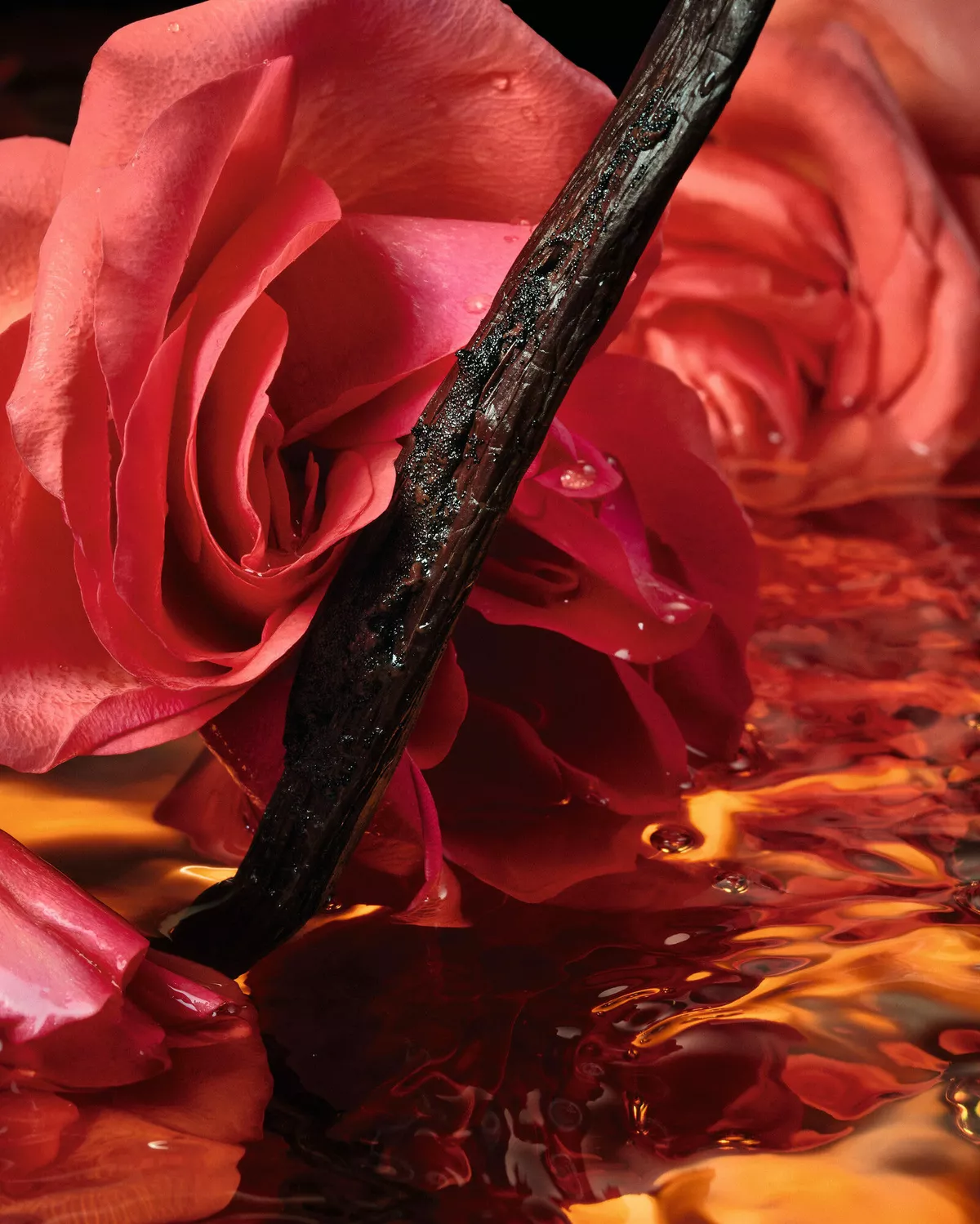
This choice is hardly random. In classic Shalimar, rose was already present in the heart alongside iris and jasmine, but subtly woven into the overall structure. In Millésime Rose, it is brought to the forefront, revealing a structure previously hidden in the depths of the composition. Here, the rose is not a solitary fresh flower, but an image permeated with resinous and warm oriental tones.
The vision of Delphine Zelc, perfumer and director of fragrance creation at Guerlain, is crystal clear:
The rose is the queen of flowers and part of Guerlinade – my favorite flower. In Shalimar Millésime Rose, I wanted to showcase all its facets.
The Shalimar bottle continues this heritage. Its design, created by Raymond Guerlain and first presented in 1925 at the International Exhibition of Decorative Arts in Paris, evokes the imagery of the Shalimar gardens. The curves of the form are inspired by the outlines of the pools, and the blue fan-shaped stopper evokes the springs. In the Millésime Rose version, the bat-shaped label is painted in pinkish tones with gold details. And the neck retains the signature black leather strap characteristic of the Millésime collection.
With Shalimar Millésime Rose, the house does not strive for a radical modernization of the classic. Instead, it uses subtle adjustments to the accents. In the original, the rose enhanced the sensuality of the heart. In the new version, it becomes a prism through which amber is rediscovered. This is not a flower in the light air, but a flower in a warm, rich space. A variation that reminds us that great fragrances never age if they allow us to look at them differently.
Source: hellomagrussia.ru