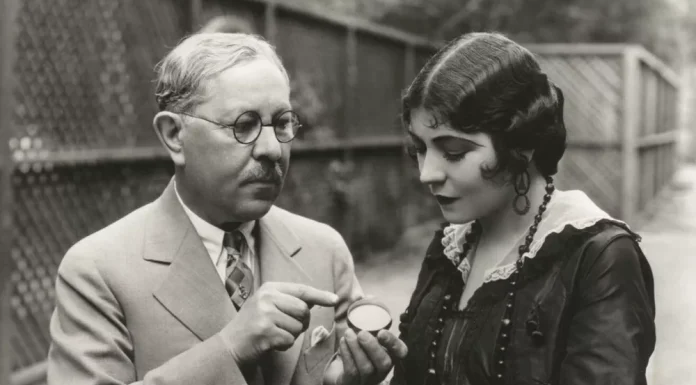

Today, makeup seems almost intuitive—a subtle gesture, a habit, part of a morning ritual. It can be subtle or, conversely, statement-making, but in any case, it is perceived as a natural extension of ourselves. It’s hard to believe that at the beginning of the 20th century, cosmetics were exclusively a theatrical tool: heavy makeup, thick textures, faces more like masks. The name Max Factor is familiar today even to those who have never been interested in cosmetics. But few know that behind this beauty empire lies a story worthy of a Hollywood film.
Maximilian Abramovich Faktorovich was born in 1877 in Lodz, then part of the Russian Empire. He grew up in a large Jewish family and began working at a very early age. At the age of eight, he was already helping in the theater, observing how actors transformed themselves into completely different people with makeup. It was then that his interest in the art of transformation developed. After serving in the army, Faktorovich moved to Ryazan. This is where his first real success story began. He opened his own shop in the city center, selling wigs, perfumes, creams, blush, and cosmetics of his own making. Today, we call such places concept stores, but at the end of the 19th century, this was a completely new format. Maximilian didn’t just sell goods—he consulted with customers, helped them choose products, and essentially created individual looks.
The shop quickly became popular not only with locals but also with artists visiting the city on tour. His reputation as a talented hairdresser and makeup artist grew. One day, his work attracted the attention of those close to the imperial court. Thus, Faktorovich received an invitation to work at the Imperial Theater, and then to serve members of the royal family and their inner circle. From the outside, it looked like a dizzying career ascent. Just yesterday, he was the owner of a small shop in Ryazan; today, he was the man responsible for the appearance of high society in the Russian Empire. However, the reality turned out to be much less appealing. Later, Factor recalled this period without much enthusiasm. Working at court ensured high status, but it practically deprived him of freedom.
His life was under constant surveillance, and the possibility of independently managing his own future became increasingly elusive. He found himself in a gilded cage, from which escape was extremely difficult. By the turn of the century, anti-Semitic sentiments had grown in society, and Maximilian firmly decided to leave Russia. But a man connected to the imperial court could not do so openly. Then, a talent that would later make him famous throughout the world helped him. With the support of a high-ranking general, Factorovich decided on the greatest adventure of his life – he skillfully disguised himself as a seriously ill person and received permission to leave for Europe for treatment. He and his family traveled to Karlovy Vary, and from there, with the help of a friend, he managed to escape to America.
In 1904, Maximilian Factorovich arrived on Ellis Island, but the immigration officer had difficulty pronouncing his unpronounceable name, so he shortened it. Thus, Max Factor first set foot on American shores. He and his family first arrived in St. Louis, where his relatives had already settled. There, Max opened a small cosmetics and wig shop, working not only with stage professionals but also with ordinary women. He didn’t simply sell products—he explained how to use them, selecting shades based on facial features. Despite all the innovations, Max Factor’s cutting-edge technology wasn’t popular in Missouri, and four years later the family moved again—this time to Los Angeles.
Cinema was just beginning to emerge in those years: cameras were imperfect, lighting was harsh, and close-ups were merciless. Theatrical makeup, which worked beautifully on stage, looked crude on camera: it cracked, cast strange shadows, and made faces look unnatural. Cinema, however, demanded the opposite—livelyness, fluidity, and verisimilitude. Factor was the first to understand that the industry needed a new tool. In 1914, he created his own version of makeup—a flexible, moldable base that applied in a thin layer and didn’t break under the spotlight. It was a revolutionary product. For the first time, an actress’s face could look natural on screen.
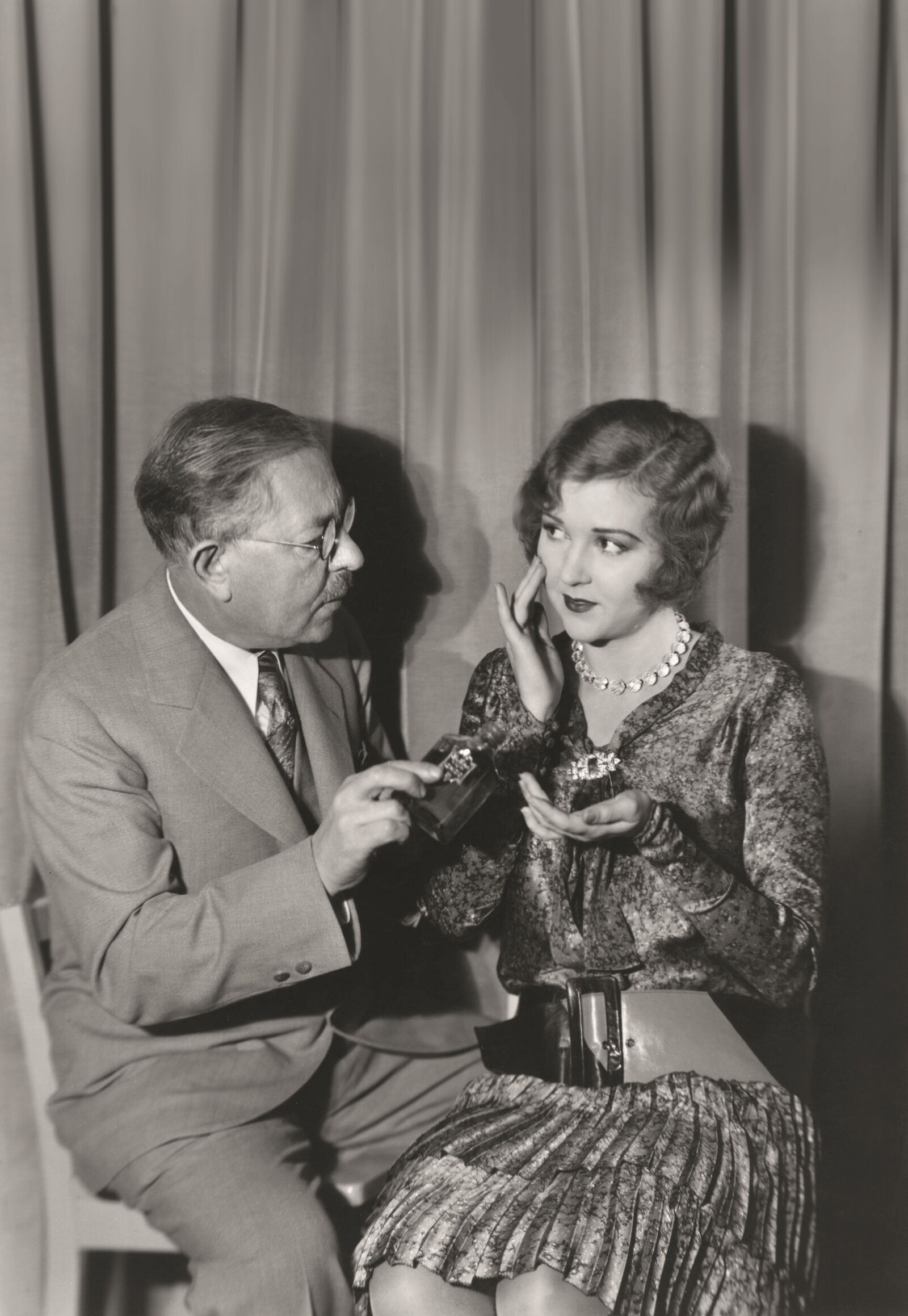
Factor began working with Hollywood’s leading stars. Greta Garbo, Marlene Dietrich, Joan Crawford—the faces we today perceive as symbols of the era—were largely created by him. But something else was important: he never worked according to a template. He developed a unique approach for each actress. This was his greatest talent: he didn’t create beauty—he revealed it.
It was Factor who coined the word “make-up” in the sense we use it today. He literally renamed the profession, moving it from the realm of the theater to a new reality. In 1929, he received a special Oscar for his contribution to the development of the film industry—a rare occurrence at the time.
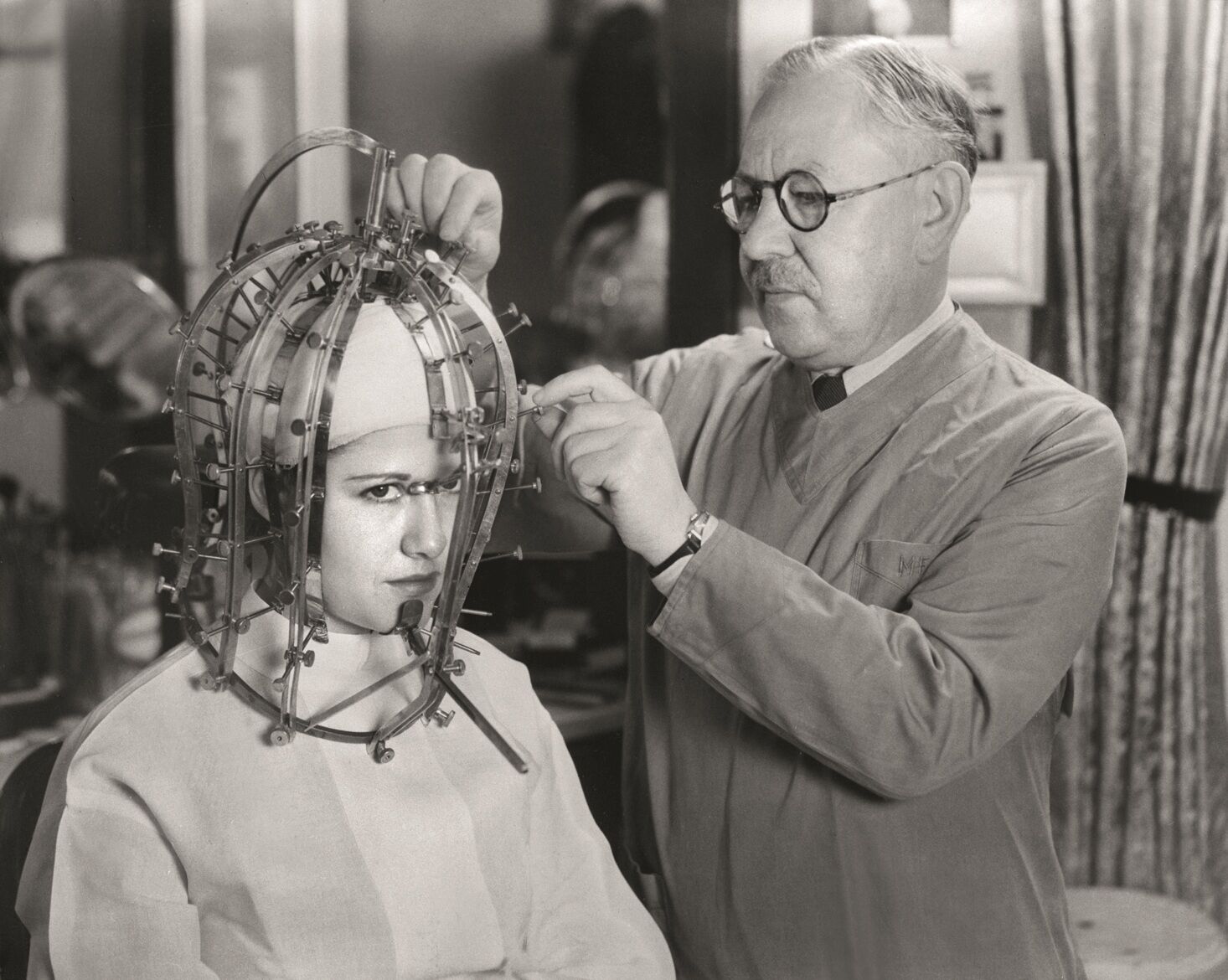
In the 1930s, Max Factor took another important step forward—he began to expand cosmetics beyond the studios. “Makeup for the stars and for you,” proclaimed the company’s slogan at the time. What had previously been available only to actresses became part of the lives of ordinary women. Pan-Cake was introduced—a compact product that adheres perfectly to the skin and creates that very “Hollywood” effect. It was created for the cinema, but instantly became popular in everyday life. Factor was one of the first to talk about skin tone as something individual. He created a system of shades, suggesting choosing cosmetics to match your complexion, rather than using a general standard. Another of his experiments was the so-called beauty micrometer, a device that allowed you to measure facial proportions. His main goal was to find small imperfections, invisible to the naked eye but so clearly visible on camera. He proposed correcting all these flaws with products from the Max Factor line.
At the same time, the maestro himself was never a person of the stage. He always remained behind the scenes, preferring to let all the ovations go to women, their faces, and therefore, to his work. The Hollywood chic we still talk about today is largely due to him. It’s not just red lips or perfect skin. It’s a sense of thoughtfulness, when every detail—from texture to shade—works into the image.
Max Factor died in 1938, but by then his name had already become an integral part of Hollywood. Management of the company passed to his son, Frank Factor, who officially changed his name to Max Factor Jr. It was he who would transform the family business into a true beauty empire. While his father taught movie stars how to look flawless on screen, his son made Hollywood beauty accessible to millions of women worldwide. Under his leadership, the company continued to develop innovative products and set trends in the industry. Over the years, Max Factor introduced a number of innovations that are now commonplace: convenient foundations, lip glosses, compact cosmetics for everyday use, the first long-lasting makeup options, and products designed for the needs of color film and television.
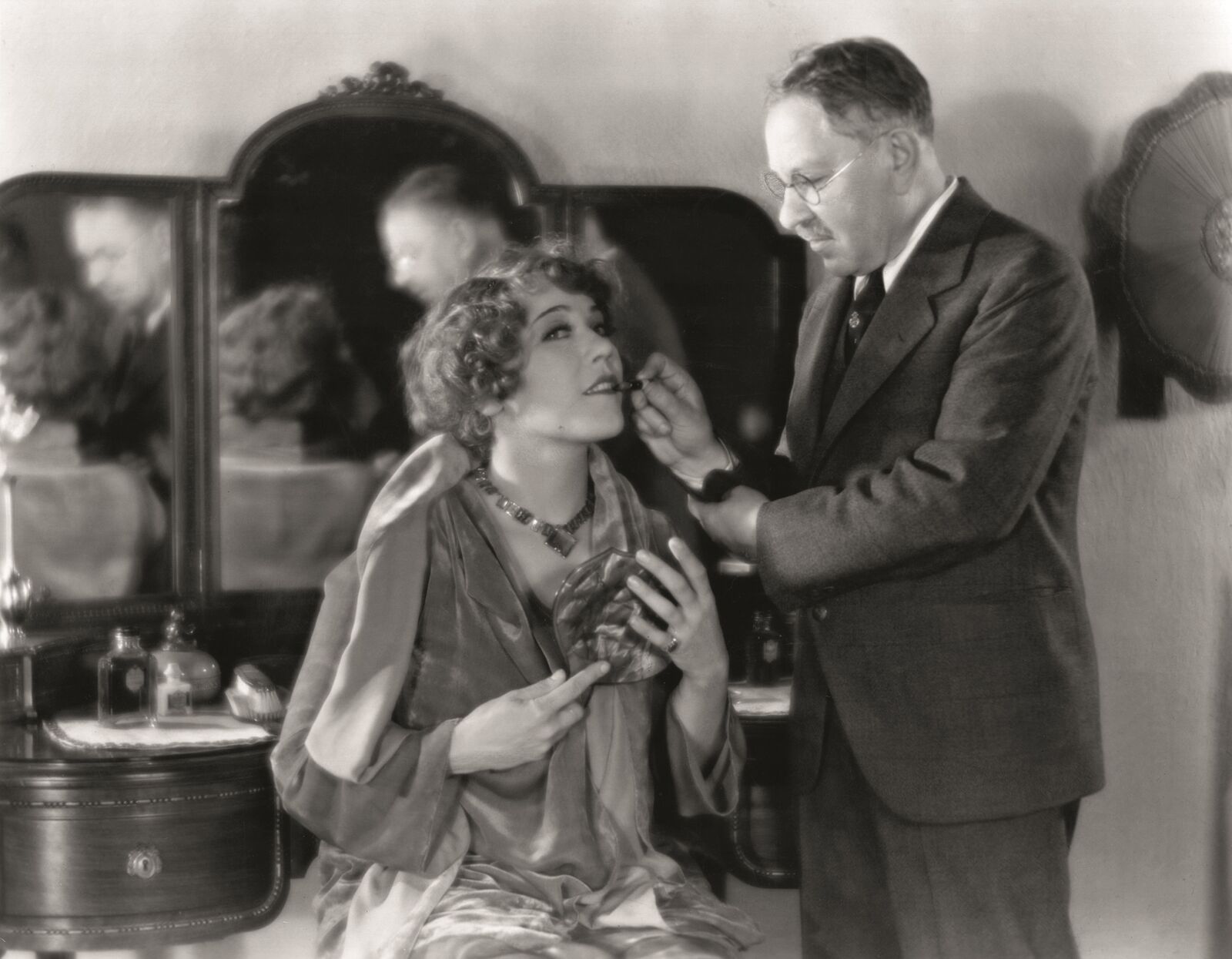
The brand truly flourished in the mid-20th century. Max Factor cosmetics were used by the most famous women on the planet, from Hollywood divas to members of royal families. The company opened new markets, expanded its product range, and gradually became one of the most influential cosmetics brands in the world.
However, over time, the beauty industry changed. New players entered the market, competition intensified, and the brand itself changed hands several times. In 1973, Factor finally sold the company. The brand subsequently changed hands until it became part of the cosmetics giant Procter & Gamble in 1991. Following the sale of the company’s beauty division in 2016, the brand became part of the portfolio of Coty, one of the largest players in the global beauty industry. Today, Max Factor remains a popular cosmetics brand. And while modern consumers rarely consider the origins of the familiar logo, behind it lies the remarkable story of an emigrant from the Russian Empire who once changed his own destiny with makeup and then changed the world’s perception of beauty. Perhaps Max Factor’s greatest contribution lies not in the creation of foundation or lip gloss. He was the first to convince women that beauty isn’t a given or a privilege. As the makeup artist himself liked to say, “You’re not born glamorous. You create it.” And today, this phrase sounds no less modern than it did in Hollywood’s golden age.